The Power of Industrial Roofs

The Power of Industrial Rooftops: How Solar Panels Generate Electricity

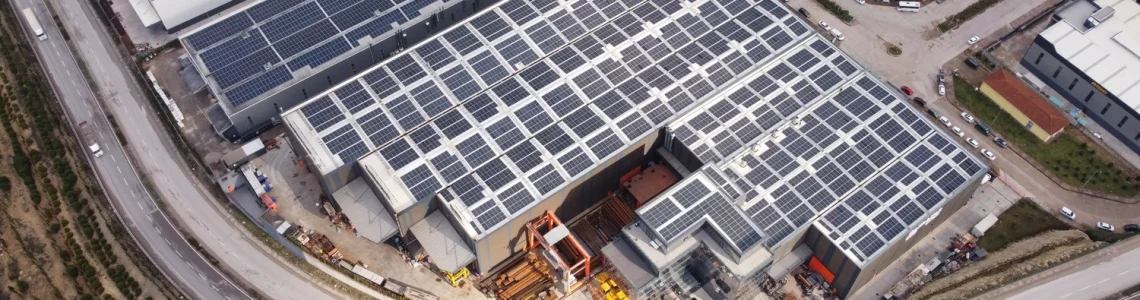
Today, sustainability and energy efficiency are becoming increasingly important for industrial businesses. In this context, solar energy systems installed on the roofs of industrial buildings offer both an environmentally friendly solution and allow businesses to reduce their energy costs. So, how do the solar panels used in these systems generate electricity? Let’s take a closer look at this process.

From Sunlight to Electricity: The Dance of Photons

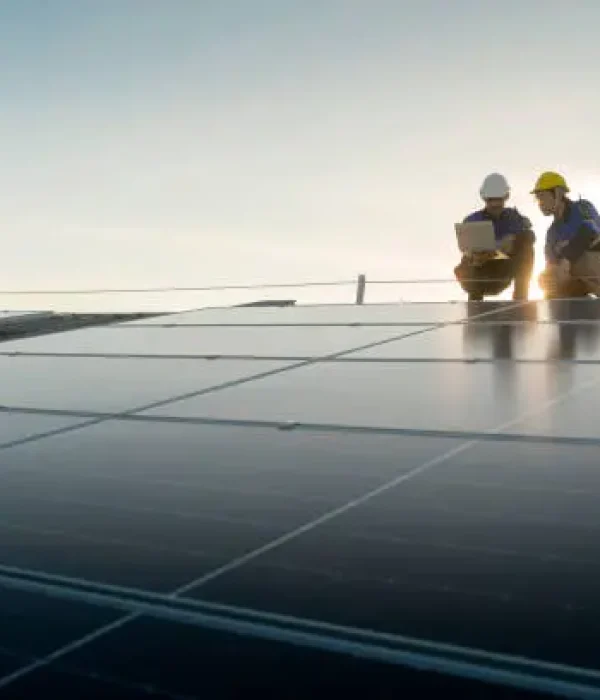
Photovoltaic (PV) cells form the basis of solar panels. These cells are usually made of semiconductor materials such as silicon. Sunlight is made up of photons, energetic particles. Photons reaching the solar panel interact with the silicon atoms in the PV cells.

As a result of this interaction, the electrons in the silicon atoms are released. These released electrons start to move in a certain direction thanks to an electrical field in the structure of the panel. These moving electrons create electric current. This is called the photovoltaic effect.

industrial roofing - sustainability
SES-solar-3

Direct Current to Alternating Current Conversion: The Role of the Inverter

The electricity generated by solar panels is direct current (DC). However, most electrical devices used in industrial plants and mains electricity run on alternating current (AC). For this reason, solar energy systems have a converter called an inverter.

The inverter converts direct current from solar panels into alternating current, which is needed by industrial plants and the power grid. Thanks to high-efficiency inverters, there is minimal energy loss during this conversion.

Other Components of the System: Efficient Energy Management

Rooftop solar energy systems are not just panels and inverters. Various components are also included for efficient and safe operation of the system:

Discover the Power of the Sun in Your Industrial Facility with Alsim!

The roofs of industrial buildings are very valuable areas in terms of solar energy potential. For this reason, it would be beneficial to install integrated Solar Energy Systems together with membrane coatings on the roof of industrial buildings from the very beginning.

Membrane roof SES applications are very important for the roofs of industrial buildings in terms of energy efficiency as well as fire safety, impermeability guarantee approval, UV resistance. The problems that may occur in the infrastructure of a solar energy system installed on the roof can be very difficult to solve in the future. For this reason, the necessary planning and project design should be carried out by an expert team from the very beginning and support should be obtained from companies with project experience in this field.

Related Posts